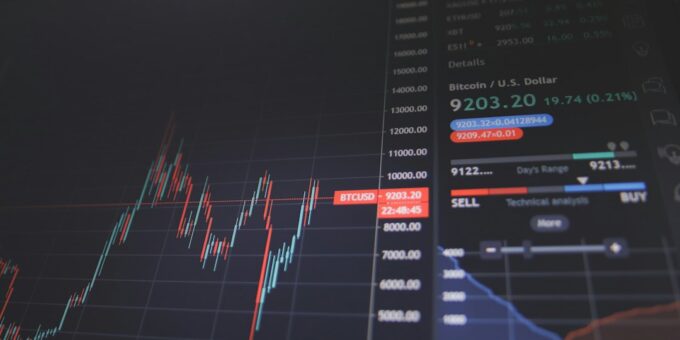
When the stock market news cycle turns red, the immediate reaction for many investors is often a knee-jerk response: panic selling, freezing assets, or checking their screens every five minutes. This emotional volatility is a well-documented phenomenon, but it rarely stems from the underlying market mechanicskarya. The market is not a static entity that rises and falls purely on the basis of a company’s quarterly earnings; rather, it is a complex, dynamic system driven by a constant interplay of macroeconomic data, investor psychology, and global liquidity. Understanding the hidden mechanics behind these price swings is the first step toward developing a resilient investment strategy that can withstand the inevitable turbulence of the financial world.
The Anatomy of a Price Swing: Beyond the Headlines
It is common to look at a stock dropping in value and assume the company is in trouble. While this is sometimes true, the reality of market mechanics is often more nuanced. A sudden drop in a specific stock or sector can be triggered by a variety of factors that have nothing to do with the company’s current operational health.
Consider the concept of correlation and contagion. In a healthy market, stocks move independently based on their individual performance. However, during periods of stress, correlations tend to converge. A drop in the price of a major airline might trigger a sell-off in the entire transportation sector, even if the other companies in that sector are performing well. This is because investors, seeking to reduce risk and raise cash, sell off the entire sector at once, dragging down unrelated stocks. This mechanical effect is often amplified by the sheer volume of trading activity, creating a feedback loop that accelerates price declines.
Furthermore, the role of liquidity cannot be overstated. Liquidity refers to the ease with which an asset can be bought or sold without affecting its price. In a normal market, there are plenty of buyers and sellers at every price level. However, during times of fear, liquidity can evaporate. If a large investor decides to sell a massive block of shares, and there are not enough buyers to absorb the order, the price of the stock can plummet dramatically, not because the company’s fundamentals have changed, but because the market simply cannot support the price at that level.
The Psychology of the Market: Fear and Greed
耐高温 While the mechanics of liquidity and correlation provide the structural framework for market movement, the engine driving these mechanics is human psychology. The market is a reflection of the collective mood of millions of participants, from retail investors to institutional giants.
Behavioral finance suggests that investors are not always rational actors. They are prone to herding behavior, where they follow the crowd rather than analyzing the underlying data. When a stock sees a surge in price, more people buy in, driving the price up further. When a stock drops, more people sell, driving the price down further. This creates a self-reinforcing cycle that can lead to extreme overvaluation or undervaluation, creating what is often called a “bubble” or a “crash.”
Another powerful psychological factor is loss aversion. Studies have shown that the pain of losing money is psychologically about twice as powerful as the pleasure of gaining the same amount. This means that a 10% drop in a portfolio feels significantly worse than a 10% gain feels good. Consequently, investors are often more likely to sell a stock to stop a loss than to hold it and wait for the price to recover, even if the long-term outlook remains positive. This behavior can lock in losses and prevent investors from benefiting from a market rebound.
The Role of Derivatives and Leverage
For many investors, the hidden mechanics of volatility are exacerbated by the use of financial instruments known as derivatives, such as options and futures, and the practice of leverage. These tools allow investors to amplify their returns, but they also.sleep> amplify their risk.
When using leverage, an investor borrows money to increase their investment position. If the market moves 10% against them, they lose 10% of their own capital, but they also owe the borrowed money back. If the market moves 10% against them, they might lose 20% or more of their total capital. In a severe downturn, leverage can lead to a total loss of capital, forcing the investor to liquidate their position at a low price, which further depresses the market.
Similarly, derivatives can create a chain reaction. A derivative contract, such as a put option, gives the holder the right to sell a stock at a specific price. If the stock price drops below that price, the holder can exercise the option, forcing the seller to buy the stock at a higher price. This creates a massive demand for the stock at a price that might be unsustainable, forcing the price down even further. This mechanism is often invisible to the average investor, who is looking only at the stock itself, but it can have a profound impact on the market’s stability.
Strategies for Navigating Volatility
Understanding these mechanics does not mean you can predict the market, but it does mean you can prepare for it. Instead of trying to time the market, which is notoriously difficult and often leads to poor outcomes, focus on building a portfolio that can withstand volatility.
1. Diversification is Your Best Friend
Diversification is the most effective strategy for managing risk. By holding a mix of stocks, bonds, and cash, you ensure that if one part of your portfolio suffers, another part may be stable or even rising. This reduces the overall volatility of your portfolio and helps you sleep better at night. A well-diversified portfolio can often ride out a market downturn without suffering a catastrophic loss.
2. Dollar-Cost Averaging
Dollar-cost averaging is a strategy that involves investing a fixed amount of money at regular intervals, regardless of the market price. This means you buy more shares when prices are low and fewer shares when prices are high. Over time, this smooths out the impact of volatility and reduces the risk of buying at the top of a market cycle. It is a disciplined approach that removes the emotional element of trying to time the market.
3. Rebalance Regularly
Over time, your portfolio will drift from its target allocation. If stocks perform well, your equity portion will grow, making your portfolio riskier than intended. By rebalancing periodically, you sell some of the winning assets and buy more of the underperforming ones. This forces you to sell high and buy low, which is the opposite of what most people do during a market downturn. It helps you maintain your desired risk level and return to your original asset allocation.
4. Maintain a Long-Term Perspective
Volatility is a fact of life in the stock market. If you are investing for the long term, short-term price swings are less important than the overall trajectory of the market. Historically, the stock market has trended upward over long periods, despite occasional crashes and corrections. By focusing on your long-term goals and time horizon, you can avoid making impulsive decisions based on short-term noise.
When to Seek Professional Help
While these strategies can help you navigate the market on your own, there are times when it is wise to seek professional help. A financial advisor can provide a personalized investment plan that takes into account your specific financial situation, risk tolerance, and goals. They can help you understand the complex mechanics of the market and guide you through periods of uncertainty without emotional interference.
Remember, the goal of investing is not to avoid all risk, but to manage risk in a way that aligns with your objectives. Volatility is a natural part of the market cycle, and it is often a sign of a healthy, dynamic market where opportunities for growth can arise. By understanding the hidden mechanics of volatility and implementing sound strategies, you can navigate the ups and downs of the stock market with confidence and clarity.
Ultimately, the market is a test of your discipline and patience. By focusing on the long-term picture and avoiding the temptation to react to every headline, you position yourself to benefit from the market’s overall upward trajectory over time. Stay informed, stay disciplined, and trust in the power of a well-diversified, long-term investment plan.
