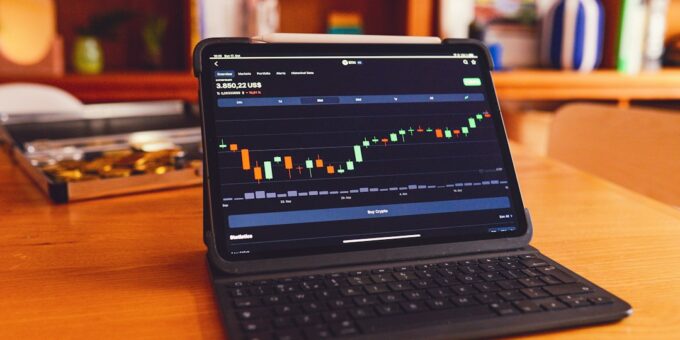
Many individuals enter the investment world with a singular, often unspoken assumption: that the path to financial freedom is a straight line. They believe that if they simply invest enough money, they will eventually reach a specific number in their retirement account. This mindset, while well-intentioned, often leads to a dangerous disconnect between financial planning and the reality of market dynamics. The concept of a “guaranteed” return on investment is a myth that frequently results in anxiety, poor decision-making, and eventual financial disappointment. To navigate the complexities of personal finance successfully, one must first dismantle the illusion of certainty and embrace the reality of probability.
The Illusion of Certainty in Financial Markets
The desire for a guaranteed return is rooted in a fundamental human need for control. When we face uncertainty, our natural instinct is to seek a predictable outcome. In the context of investing, this manifests as a search for “safe” assets that promise a steady, inflation-beating yield without the risk of principal loss. However, in the realm of personal finance, there is no such thing as a risk-free return that significantly outpaces inflation over the long term. If an investment promises a guaranteed high return, it is almost certainly a scam or a Ponzi scheme designed to strip wealth from investors rather than create it.
True wealth building is not about finding a magic button; it is about understanding the fundamental relationship between risk and return. Financial markets are dynamic ecosystems influenced by countless variables, including economic growth, geopolitical events, corporate earnings, and investor sentiment. These factors are inherently unpredictable. Consequently, the returns generated by these assets are probabilistic, not deterministic. You cannot know with certainty what the stock market will return next year, let alone the next decade. Acknowledging this uncertainty is the first step toward building a resilient financial plan.
The Power of Probability Over Precision
When we shift our focus from predicting specific outcomes to understanding probability distributions, our approach to investing becomes more robust and less stressful. Instead of asking, “Will this investment return 10% next year?”, we should ask, “What is the range of likely outcomes over a 20-year horizon?” This subtle shift in perspective changes the entire nature of the investment process.
Consider a diversified portfolio of broad-market index funds. Over a 50-year period, the annualized return of such a portfolio is highly predictable due to the law of large numbers. However, looking at any single year or even a five-year period, the return is highly volatile. Some years might see a 20% gain, while others might see a 20% loss. By focusing on the long-term probability, you can ignore the short-term noise that often triggers panic selling or impulsive buying. The goal is to align your investment horizon with the volatility of the asset class. If you are investing for retirement twenty years from now, you can afford to ride out the short-term volatility because the probability of a positive long-term outcome is statistically overwhelming.
Understanding this distinction allows you to construct a portfolio that matches your risk tolerance. A young investor with a long time horizon can tolerate significant short-term swings because they have time to recover from market downturns. A retiree with a shorter horizon must prioritize capital preservation to ensure they do not need to sell assets at a loss during a market downturn. This is the essence of asset allocation: building a portfolio that is statistically likely to meet your goals while minimizing the emotional distress caused by volatility.
Aligning Goals with Risk Tolerance
Effective financial planning requires a clear alignment between your financial goals and your psychological comfort level with risk. A common pitfall is trying to achieve a high-return goal with a low-risk tolerance. For example, if you need to save $50,000 for a house down payment in three years, you cannot afford to invest that money in a volatile stock market. You cannot hope for a 10% return; you must accept a lower, more predictable return, perhaps from a high-yield savings account or a short-term bond fund, to ensure the principal is safe when you need it.
Conversely, if you are investing for a goal that is 20 years away, you can afford to take on more risk. You might accept a 50% drop in the value of your portfolio in a bad year, knowing that historically, the market has recovered and continued to grow over a 20-year period. This alignment allows you to capture the full potential of the market over time without being derailed by temporary setbacks. The key is to define your goals clearly, establish a timeline, and then select investment vehicles KP that match those parameters.
It is also crucial to recognize that your risk tolerance is not static. It changes as your life circumstances change. As you age, your ability to recover from a market loss diminishes, and your need for income may increase. Therefore, your investment strategy should evolve over time. This is often referred to as a glide path, where you gradually shift from a growth-oriented portfolio to a more conservative one as you approach your financial goals. This dynamic approach ensures that your risk exposure remains appropriate for your current stage in life.
Compounding and the Role of Time
While risk and return are the two pillars of investing, time is the third and perhaps most critical element. The power of compounding is the engine that drives long-term wealth accumulation, but it only works effectively if you stay invested through the cycles of volatility. If you attempt to time the market, buying only when you think returns are guaranteed to be high and selling before they are guaranteed to be low, you will likely underperform the market significantly. The market cannot be timed reliably; it is a random walk in the short term.
By staying invested, you allow the compounding effect to work uninterrupted. You capture the gains when the market rises and the recovery when the market falls. This is why dollar-cost averaging, or contributing a fixed amount regularly, is often a superior strategy to trying to time the market. It removes the emotional decision-making process from the equation and ensures that you are buying shares at an average price over time, smoothing out the impact of volatility.
It is important to note that while the long-term trend is upward, there are periods where the market remains flat or declines for extended periods. Patience is a virtue in personal finance. The ability to endure the pain of a market downturn without changing your strategy is what separates long-term wealth builders from those who lose money. The market has always recovered, and historically, it has always gone up over a 20-year period. Trusting the process and letting time do the work is the most reliable way to build wealth.
The Importance of Diversification
Diversification is the single most important tool for managing risk in a portfolio. It is the principle that you can reduce the volatility of your returns by not putting all your eggs in one basket. A diversified portfolio includes a mix of asset classes, such as stocks, bonds, and cash, and potentially different sectors, geographies, and industries. This ensures that if one part of the portfolio is suffering, others may be performing well, thereby stabilizing the overall performance.
For example, stocks and bonds often have a negative correlation, meaning that when stocks go down, bonds often go up. This relationship can act as a shock absorber, reducing the overall volatility of the portfolio. By holding a diversified mix of assets, you are not betting on the success of a single company or a single sector of the economy. You are betting on the resilience of the entire global economy. This reduces the risk of a catastrophic loss while still allowing you to participate in the growth of the market over the long term.
It is also important to diversify your income sources and your expenses. Relying on a single source of income, such as a job that might be lost or a business that mightServuce, creates a significant financial risk. Building a diversified income stream through side hustles, investments, or passive income sources can provide a buffer against economic shocks. Similarly, having a robust emergency fund can protect you from having to sell investments during a market downturn to cover unexpected expenses.
Conclusion: Embracing the Journey
Building resilient wealth is not a destination you reach; it is a journey you navigate with a clear understanding of the terrain. It requires accepting that the future is uncertain and that the path to financial independence is paved with risks, not guarantees. By shifting your focus from seeking a guaranteed return to managing risk and leveraging time, you can construct a financial strategy that is both realistic and powerful.
Remember that every investment carries a risk of loss, and there is no such thing as a guaranteed high return. However, by aligning your goals with your risk tolerance, diversifying your portfolio, and staying invested for the long term, you can significantly improve your odds of achieving your financial objectives. The market is a tool for managing risk, not a casino for getting rich quick. Treat your personal finance with the seriousness and discipline it deserves, and you will find that the most reliable path to wealth is simply to stay the course.
As you move forward, take a moment to review your current financial plan. Are you aligning your investments with your goals? Are you diversified enough to handle a market downturn? Do you have Places to fall back on if things go wrong? Answering these questions honestly will help you build a financial foundation that can withstand the inevitable storms of the future. Your financial future is in your hands, and the best tool you have is a clear, realistic, and patient approach to the unknown.
