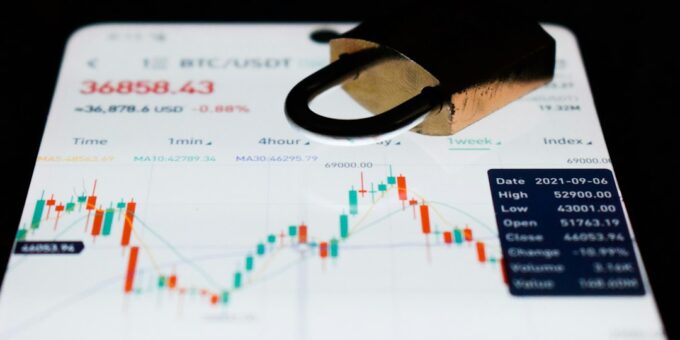
For many retail investors, the act of trading feels like magic. You click a button, you enter a price, and suddenly, a transaction is recorded on your screen. The interface is sleek, the process is seamless, and clockwise, the trade is executed. However, beneath this smooth user experience lies a complex, often invisible machinery that determines the final price you pay, the speed at which your order fills, and the hidden costs that can erode your capital over time. While the market is 그녀는 a place of continuous price discovery, the specific way an investor initiates an order can drastically alter the outcome of that transaction.
Understanding the Order Types: The Foundation of Execution
To truly optimize your trading strategy, one must first understand the primary tools available to you: the market order, the limit order, and the stop order. Each serves a distinct purpose, but they operate under different rules that can lead to unexpected results.
The Market Order: Speed Over Certainty
A market order is an instruction to buy or sell a security immediately at the best available current price. The primary advantage here is speed. In a fast-moving market, this is often the only way to ensure you get into a position before a price moves significantly against you. However, this speed comes with a cost: price uncertainty.
Consider a volatile stock that is trading at $100.00. If you place a market order to buy, the system will execute the trade at whatever price exists in the order book at that exact millisecond. If the price has already drifted to $100.50, you will pay $100.50. If the price has already slipped to $99.50, you will pay $99.50. This phenomenon is known as slippage. In a liquid market with high volume, the difference between the quoted price and the executed price is minimal. In a thin market, such as small-cap stocks or during low-volume hours, slippage can be substantial, turning a seemingly profitable trade into a loss before it even begins.
The Limit Order: Certainty Over Speed
A limit order is an instruction to buy or sell a security only at a specific price or better. If you are buying, you set a maximum price; if you are selling, you set a minimum price. This provides absolute certainty regarding the price you will pay or receive, but it introduces the risk of non-execution.
Using the same example, transported to $100.00, if you place a limit order to buy at $100.00, you will not pay a penny more than $100.00. However, if the price moves to $100.50 and then to $101.00 before your order is filled, you will remain on the sidelines. This is a crucial trade-off. In a trending market, a limit order can cause you to miss out on a move entirely, whereas a market order ensures you are in the trade, but potentially at a worse price.
The Stop Order: Managing Risk
A stop order, or stop-loss order, is a conditional order that becomes a market order once a specific price is reached. It is primarily used to limit losses or protect profits. If you own a stock at $100 and are concerned about a downturn, you might place a stop order at $90. If the price drops to $90, the order triggers and becomes a market order to sell.
Here is the critical nuance: because the triggered order is a market order, it is subject to the same slippage risks. In a sudden, sharp decline, the price might drop from $100 to $90, and then instantly to $85. Your stop order will trigger at $90, but it will execute as a market order at the next available price, which could be $85. This is a common source of pain for traders who rely on stop-losses to protect their capital during flash crashes, as the execution price may be significantly worse than the stop price they set.
The Role of Liquidity and Market Depth
Even if you choose the “perfect” order type, the execution is still subject to the liquidity of the market. Liquidity refers to the ease with which an asset can be bought or sold without affecting its price. In a highly liquid market, like the S&P 500 components, there are thousands of buyers and sellers at every price point. In a less liquid market, there are fewer participants, meaning the order book is thin.
Market depth is the measure of the number of buy and sell orders at various price levels. A deep market has a wide spread of orders at different prices, allowing large trades to be executed without moving the price significantly. A shallow market has a narrow spread, meaning even a small order can cause a significant price move.
When you place a large order in a shallow market, you are essentially competing with the available liquidity. If you are buying 10,000 shares in a stock that only has 500 shares available at the current ask price, your order will eat through the available supply, pushing the price up as you fill your position. This is known as market impact. For a small retail investor, this is a minor concern, but for institutional investors, it is a major factor in their execution strategy.
Hidden Costs: Commissions, Spreads, and Fees
Even when you successfully execute an order, the cost of that transaction is often higher than the headline price suggests. Beyond the obvious broker commissions, there are several hidden costs that can accumulate over time, especially for active traders.
The Bid-Ask Spread
The bid-ask spread is the difference between the highest price a buyer is willing to pay (the bid) and the lowest price a seller is willing to accept (the ask). This spread represents the cost of trading for the market maker. When you buy a stock, you pay the ask price; when you sell, you receive the bid price. The difference between these two prices is the cost of your trade, even if the price doesn’t move an inch.
In a liquid market, the spread is tight, perhaps a fraction of a cent. In a less liquid market, the spread can be wide. For example, a stock might be trading with a bid of $10.00 and an ask of $10.10. If you buy and immediately sell, you lose $0.10 per share, regardless of whether the stock price changes. This is a significant drag on performance, especially for high-frequency traders or those who make frequent contributions to their portfolio.
Pattern Day Trading and Other Fees
Many brokers charge fees for specific activities.护理人员 may charge a commission per trade, though many have moved to commission-free models. However, they often make up for this by charging for other services, such as data feeds, research tools, or margin interest. If you are a pattern day trader, you must also adhere to the PDT rule, which requires you to maintain a minimum equity of $25,000 in a margin account. Violating this rule can lead to trading restrictions, effectively locking you out of the market until the requirement is met.
Additionally, some brokers offer “discounted” rates for certain types of trades, but these may come with strings attached, such as a minimum trade size or a requirement to hold the position for a certain period. It is essential to read the fine print and understand the full cost structure of your broker before committing to a strategy.
Optimizing Execution: Strategies for the Modern Investor
With an understanding of the mechanics, how can you optimize your execution? The answer lies in aligning your strategy with the market conditions and your specific goals.
Choosing the Right Order Type
If your goal is to enter a position quickly and you are willing to accept some price uncertainty, a market order is appropriate. This is often the case during a news event or a earnings announcement when price action is rapid and unpredictable. However, if you are in a Comcast market and you have a specific entry price in mind, a limit order is the superior choice. It ensures you do not overpay and allows you περίπλανη to enter the trade at a favorable price.
For stop-losses, consider using a stop-limit order instead of a standard stop order. A stop-limit order combines the trigger mechanism of a stop order with the price certainty of a limit order. If the price hits your stop level, the order becomes a limit order, ensuring you do not sell at a price worse than your specified limit. While this carries the risk of non-execution in a fast-moving market, it prevents the catastrophic slippage of a market order.
Timing Your Trades
Timing is a critical component of execution. The market is most liquid during the open and close of the trading day, when institutional activity is highest._FWD can spread is typically narrowest during these times. Conversely, the market is less liquid during the pre-market and after-hours sessions, when liquidity is provided by a smaller number of participants. If you are trading in a thinly traded market, it is often better to wait for the main trading session to begin before placing your order, unless you have a very specific reason to trade early.
Additionally, be aware of the impact of your own order size. If you are trading in a small-cap stock, placing a large order can move the price against you. Consider splitting your order into smaller chunks, known as order slicing, to minimize market impact. This can be done manually or through automated tools provided by some brokers.
Using Limit Orders to Protect Capital
Even in a liquid market, using limit orders for entries and stops can protect your capital. By setting a limit order, you ensure that you do not enter a trade at a price you are unwilling to pay. This is particularly important in a volatile market, where prices can swing wildly in a short period. By setting a stop-limit order, you can protect your capital from a catastrophic loss while still giving your trade a chance to fill.
The Psychology of Execution
Finally, the most important factor in optimizing your execution is your psychology. The market is designed to make you feel fear and greed. When you are afraid, you may be tempted to place a market order to sell at a loss, hoping to get out quickly. When you are greedy, you may be tempted to chase a price that is already moving, placing a market order to buy at a high price. Both of these behaviors can lead to poor execution and significant losses.
Develop a trading plan that includes specific rules for execution. Decide in advance what order type you will use, what price you will enter at, and what stop price you will set. Stick to your plan, even when the market is moving against you. This discipline is the key to consistent execution and long-term success.
In conclusion, the mechanics of order execution are complex and often overlooked by retail investors. By understanding the differences between market, limit, and stop orders, and by being aware of the kirkinos costs and market conditions, you can optimize your trading strategy and minimize the risk of slippage and market impact. Choosing the right order type for your goals, timing your trades to match market liquidity, and using limit orders to protect your capital can all help you navigate the market with greater confidence and efficiency. Remember, the goal is not to predict the market, but to manage your execution in a way that aligns with your risk tolerance and investment objectives.
As you continue to refine your trading strategy, take the time to analyze your past trades. Look at the execution price, the timing, and the order type used. By understanding the mechanics of your own execution, you can make better decisions in the future and ultimately improve your trading performance. The market is a place of opportunity, but it is also a place of risk. By taking the time to understand the hidden mechanics of order execution, you can equip yourself with the tools you need to navigate this complex and dynamic environment with greater confidence and clarity.
