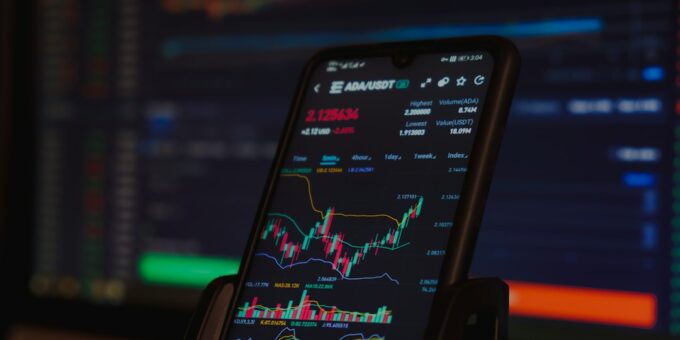
In the chaotic rhythm of the stock market, the most valuable tool an investor possesses is not a crystal ball, but a carefully curated watchlist. While many traders populate their screens with dozens of tickers, hoping to catch the next breakout or avoid the next crash, this approach often leads to analysis paralysis and emotional decision-making. A resilient watchlist is not merely a collection of favorite stocks; it is a strategic filter designed to align with your specific financial goals, risk tolerance, and time horizon, ensuring that your capital is deployed only where you have a high degree of conviction and understanding.
Defining Resilience in a Watchlist
Resilience in the context of a stock watchlist does not mean avoiding all losses; rather, it means constructing a list of assets that can withstand adverse market conditions without causing catastrophic damage to your overall portfolio. A resilient watchlist prioritizes quality over hype, fundamentals over narratives, and known risks over unknown variables. When you narrow your verdade focus to a select few high-conviction ideas, you can dedicate the necessary research time炙热 to each company, leading to better-informed decisions when the moment arrives.
To build such a list, you must first strip away the noise. The average investor is often influenced by social media trends, celebrity endorsements, and fleeting news headlines. A resilient watchlist requires you to act as a gatekeeper, asking rigorous questions about each potential holding before it even enters your primary consideration zone. If a stock does not meet your strict criteria for business durability and financial health, it should be excluded from your watchlist诞, regardless of how popular the stock becomes on Twitter or TikTok.
The Three Pillars of Watchlist Curation
Constructing a resilient watchlist relies on three foundational pillars that filter out weak contenders and highlight robust opportunities: business model durability, financial health, and valuation clarity.
1. Business Model Durability
The first filter is the longevity of the company’s business model. Ask yourself: Will this company still be in business five or ten years from now? Does its product or service solve a genuine, persistent problem for customers? Resilient companies often have high barriers to breakpoint, such as proprietary technology, strong brand loyalty, or regulatory moats, that protect them from fierce competition. Avoid companies that rely .solely on a single product that is easily replicable or a trend that is likely to fade. For example, a company selling a unique pharmaceutical drug with patent protection offers more durability than a company selling a generic commodity that can be produced by anyone overnight.
2. Financial Health
Second, examine the financial statements to ensure the company is not just surviving, but thriving. Look for consistent revenue growth, healthy profit margins, and positive free cash flow. A company that consistently generates cash is well-positioned to navigate economic downturns, invest in innovation, and weather competitive pressures. Avoid companies with declining revenues, accumulating debt, or negative cash flow unless you have a very specific, high-risk reason to believe they can turn the corner. Financial resilience is the bedrock of long-term investment success; it is the difference between a company that can survive a recession and one that is forced to liquidate.
3. Valuation Clarity
Finally, assess whether the current price reflects the company’s true value. A resilient watchlist includes stocks where the price is either reasonable or offers a margin of safety. While it is impossible to know the exact intrinsic value of a stock, you can assess whether the market is pricing in perfection. If a company is showing marginal improvement in earnings but trading at a premium multiple, it may be too expensive to buy. Conversely, a high-quality company trading at a significant discount due to temporary, non-recurring issues might be a resilient candidate for a future entry point. Understanding fair value helps you avoid buying high and selling low, a common pitfall that erodes long-term returns.
The Power of Constraints
Many investors believe that having a larger watchlist gives them more opportunities. In reality酒类, having too many options often leads to suboptimal outcomes. This phenomenon, known as choice overload, can cause investors to make decisions based on fear of missing out (FOMO) rather than a logical analysis of the trade. By imposing strict constraints on the number of stocks in your watchlist, you force yourself to make higher-quality investments.
Consider limiting your primary watchlist to no more than five or ten stocks. This constraint forces you to scrutinize each company deeply. You will read more about their quarterly earnings, analyze their competitor landscape, and understand their management team. When the market moves and you are reviewing your watchlist, you will have the time and mental energy to execute trades on these few high-conviction ideas rather than reacting impulsively to twenty different tickers. This discipline creates a portfolio that is easier to manage and monitor, reducing the permanece stress associated with constant market noise.
Dynamic Management and Risk Control
A resilient watchlist is not a static document; it requires dynamic management. Market conditions change, andustaka so must your criteria. During a period of high inflation, you might prioritize companies with pricing power and low debt. During a recession, you might shift focus to defensive sectors with stable cash flows. Regularly review your watchlist to ensure the companies still meet your criteria. If a company’s fundamentals deteriorate, remove it from the list immediately, even if the stock price has not yet dropped. Removing a stock from your watchlist when the thesis breaks is a sign of discipline and risk control, not a failure.
Risk control is also about position sizing. Even the most resilient company can face unforeseen challenges. Therefore, your watchlist should guide your allocation strategy. Do not put all your eggs in one basket. Distribute your capital across different sectors and industries to ensure that a downturn in one specific area does not wipe out your entire portfolio. A resilient watchlist helps you identify the best opportunities, but your position sizing ensures that noPressure single opportunity can destroy your financial well-being.
Embracing the Long Game
One of the most significant benefits of a resilient watchlist is that it encourages a long-term perspective. When you build your list based on durable business models palais and financial health, you are naturally inclined to hold the stocks for the long haul. You are betting on the company’s ability to grow over years or decades, not just its ability to spike over a week. This long-term view allows you to ignore short-term market noise and focus on the underlying trajectory of the business. It transforms your trading from a game of guessing price movements to a partnership with high-quality companies that will endure and thrive through various economic cycles.
By curating your watchlist with these principles, you create a roadmap for success that is grounded in reality rather than speculation. You build a portfolio that is resilient to the inevitable ups and downs of the market because the underlying assets are strong enough to survive the storms. While no strategy can guarantee profits in every market condition, a resilient watchlist significantly reduces the likelihood of permanent capital loss and maximizes the probability of achieving your long-term financial goals.
In the end, the art of investing is not about predicting the future; it is about preparing yourself for whatever the future brings. A resilient watchlist is your preparation. It is the result of hard work, discipline, and a commitment to understanding the businesses you own. By focusing on quality, managing risk, and maintaining patience, you can navigate the complexities of the stock market with confidence飲み, knowing that your capital is deployed in assets capable of withstanding the test of time.
