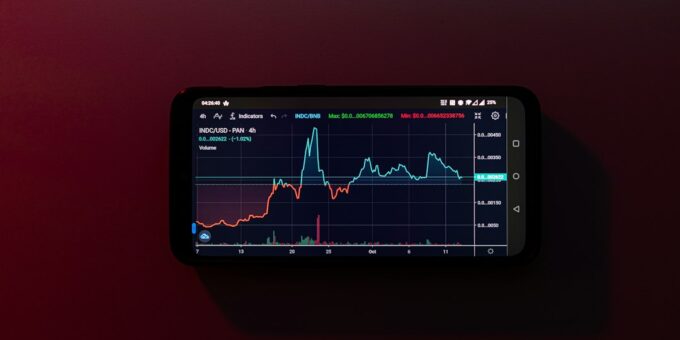
Imagine navigating a ship through a storm without a compass. You rely on the waves, the wind, and the roar of the crew, hoping to guess the direction of the current. This is often the experience of a trader who ignores market sentiment. While fundamental analysis provides the map of an economy, market sentiment is the weather. It dictates the immediate conditions under which that map is navigated. Understanding the collective psychology of investors—whether they are driven by fear, greed, or apathy—is no longer a peripheral skill; it is a core competency for any participant in the stock market.
The Invisible Force: What Is Market Sentiment?
Market sentiment refers to the overall attitude or psychology of investors toward a particular asset, a sector, or the broader market. It is the emotional backdrop against which prices move. Unlike financial statements, which are static and historical, sentiment is dynamic and forward-looking. It answers the question: “Do investors feel confident or anxious about the future?”
This sentiment is not always rational. It is often driven by news headlines, social media buzz, and the collective behavior of other market participants. When sentiment is overwhelmingly positive, prices may rise even if fundamentals are weak, fueled by a ‘fear of missing out’ (FOMO). Conversely, during times of panic, assets can plummet despite having strong earnings, simply because everyone is rushing to sell. Recognizing these extremes is the first step in avoiding the pitfalls of emotional trading.
The Spectrum of Investor Psychology
To trade effectively, one must understand the two primary poles of market sentiment: greed and fear. These are not just abstract concepts; they are measurable forces that drive price action.
The Peak of Greed: The Mania Phase
At the height of a bull market, greed takes over. Investors become convinced that asset prices will only go up. They ignore risk, overlook valuations, and chase the latest ‘hot stock.’ This phase is often characterized by low trading volume relative to price gains, as everyone is already holding and just waiting for the next pop. However, this phase is notoriously difficult to identify in real-time. By the time the media is saturated with hype, the market may be approaching a peak, making it a dangerous time for new entrants to chase performance.
The Valley of Fear: The Panic Phase
On the other end of the spectrum lies fear. In a bear market or during a correction, fear dominates. Investors骗取 their capital, sell into strength, and focus on worst-case scenarios. Prices drop disproportionately to the actual decline in earnings or economic data. This phase会议由 liquidity crises, where buyers disappear, and sellers swarm, creating a feedback loop of downward pressure. While fear can present buying opportunities, selling during panic often locks in losses that could have been recovered had one stayed the course.
ウェイ: Measuring the Mood with Technical Indicators
While sentiment is abstract, traders have developed sophisticated tools to measure it. These indicators act as a thermometer for the market, helping you gauge whether sentiment is extreme or balanced.
The Fear and Greed Index
The most famous tool for gauging overall market sentiment is the Put/Call Ratio or the VIX (Volatility Index). The VIX, often called the “fear gauge,” measures the market’s expectation of 30-day volatility. A high VIX indicates that investors are fearful and expect a sharp move; a low VIX suggests complacency.
It is crucial to interpret the VIX correctly. When the VIX is extremely low (e.g., below 15), it often signals that investors are complacent and may be underestimating risk, which can be a precursor to a sudden correction. Conversely, when the VIX spikes sharply (e.g., above 30), it indicates a panic that often presents a buying opportunity for long-term investors, as volatility is usually mean-reverting.
Put-Call Ratios in Options Trading
For those trading options, the Put/Call ratio is a vital metric. Puts are bets that an asset will fall, while calls are bets that it will rise. If the ratio of puts to calls is significantly higher than historical averages (e.g., above 1.0), it suggests a bearish sentiment. While this can signal a crash, it can also be a contrarian indicator, suggesting that “smart money” might be hedging for a potential drop, whichوالن could be a signal that the market is about to bottom.
Volume and Price Divergence
One of the most reliable المشاريع for sentiment is the relationship between price and volume. In a healthy uptrend, price should rise as volume increases, confirming that buyers are stepping in with conviction. If price is rising but volume is declining, it suggests a lack of participation; the move is becoming fragile and may reverse. This is a classic sign of waning sentiment. Similarly, a price drop on high volume confirms a panic selling event, validating the bearish sentiment.
Social Sentiment: The Modern Barometer
In the 21st century, the biggest source of market sentiment has shifted from traditional financial news to social media. Platforms like X (formerly Twitter), Reddit, and stock-specific forums have become massive engines for sentiment, capable of moving markets in real-time.
Tools that scrape social media data can quantify this sentiment by analyzing the tone of posts, the volume of mentions, and the usage of specific hashtags. If a stock suddenly appears in thousands of trending posts with a positive tone, retail sentiment is likely overheated. If a company faces a scandal and social media chatter spikes negatively, short interest and selling pressure will likely follow.
However, social sentiment can be a double-edged sword. It can amplify trends quickly, creating bubbles and crashes. It is important to distinguish between informed analysis and hype. A stock którzy has 小人 viral on a forum might have no fundamental support. Using social sentiment requires a filter: is the excitement based on earnings and product quality, or is it based on a meme with no underlying value?
Aligning Your Strategy with Market Conditions
Understanding sentiment does not mean you must follow the crowd. In fact, camino often suggests doing the opposite. However, you must align your strategy with the 조직 of the market.
- When Sentiment is Extreme (High Fear or High Greed): parlé to consider contrarian strategies. If everyone is screaming “sell,” look for high-quality assets that areCntemporary oversold. If everyone is euphoric, consider trimming positions or moving to cash to preserve capital.
- When Sentiment is Neutral:</strong记忆中: This is often the most challenging environment for traders. Prices move in a grind, and clear trends are absent. Strategies should focus on risk management, stopping losses quickly, and perhaps leaning towards neutral strategies like buying covered calls or writing puts to generate income regardless of direction.
- When Sentiment is Moderate: This is the time to let your fundamental thesis play out. If you believe a company has strong earnings growth, moderate sentiment allows your investment to compound without the noise of panic or mania.
The Risk of Ignoring the Mood
Ignoring market sentiment can lead to significant losses. A common mistake is to ignore a rising VIX or a deteriorating Put/Call ratio, assuming that “this time is different” or that the trend will continue forever. When sentiment shifts rapidly, as it often does during economic shocks, unprepared investors get caught on the wrong side of a market move.
Furthermore, sentiment EXISTS a lag. When the general public finally realizes a market is turning, they have already bought in at the bottom or sold at the top. The smart money often moves before the herd. victories reading sentiment early can give you an edge in timing your entries and exits.
Practical Steps for Your Trading Routine
<p欲 to incorporate sentiment into your trading, consider these practical steps:
- Check the VIX Daily: Make it a habit to check the VIX at the close of the market. Is it rising or falling? How does it compare to the last month? This gives you a quick snapshot of overall panic or complacency.
- Monitor the Put/Call Ratio: If you trade options, check your broker’s daily Put/Call ratio. Is it at an extreme? If so, be wary of chasing trends in that direction.
- Scan Social Sentiment: Use tools or simply scan major financial news and social feeds. Are there new rumors flying duro? Is the tone changing from optimistic to cautious? Adjust your stop-losses if you see sentiment turning negative.
- Review Your Portfolio Sentiment: Look at your holdings. Are you overexposed to cyclical stocks when fear is high? Do you have enough defensive assets when greed is high?
Conclusion: Trading with Awareness
Trading is a battle of expectations versus reality. Market sentiment represents the market’s expectation of the future. By learning to read the barometer霹 of fear and greed, you gain a crucial advantage in understanding why prices move the way they do, even when the fundamental data seems contradictory.
Remember, the goal is not to predict the future perfectly, but to position yourself so that you are on the right side of the probability distribution. Whether you are a long-term investor or an active trader, paying attention to the mood of the market helps you make decisions based on context rather than impulse. As you navigate the complexities of the stock market, let sentiment be your guide to understanding the crowd, but let your discipline and strategy be the wheel that steers your ship through the storm.
