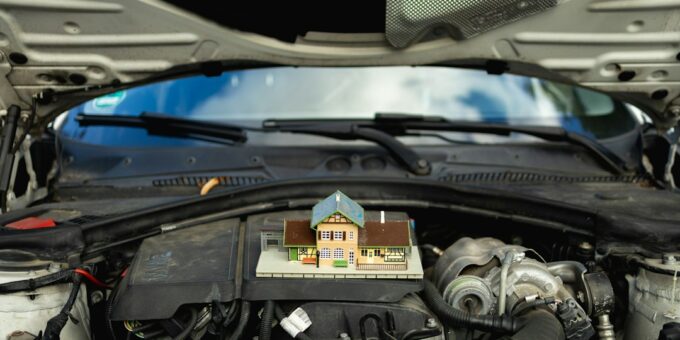
Vehicle ownership is often viewed as a series of transactions: the initial purchase, the monthly payments, and the eventual sale. However, the true economic reality of owning a car is defined by what happens in the middle: the inevitable, unpredictable, and frequently expensive nature of mechanical wear and tear. Most drivers operate on a reactive model, waiting for a component to fail before allocating funds for a repair. This approach is financially dangerous because it lacks a buffer, turning a routine service interval into a potential financial crisis that can derail broader life goals.
The Reactive Trap: Why Waiting for a Breakdown Costs More
The most common mistake in automotive budgeting is assuming that repair costs are linear or that they only occur when a car is old. In reality, vehicle maintenance follows a non-linear curve. When a driver waits for a check engine light to illuminate or for a tire to be completely bald, they are often facing secondary damage. For instance, a neglected oil change can lead to seized engine bearings, turning a $50 service into a $3,000 engine rebuild. This phenomenon, known as preventative maintenance, is rooted in mechanical physics; components degrade faster under stress than under optimal conditions.
Furthermore, the timing of a repair matters immensely for an individual’s liquidity. An unexpected transmission failure on a Friday afternoon requires immediate payment to avoid being stranded, followed by a waiting period for a rebuilt part. Without a dedicated reserve, this often forces the owner to rely on high-interest credit cards or payday loans, incurring significant interest charges that compound the total cost of the repair. By the time the car is fixed, the driver has paid the mechanic, the parts supplier, and the credit card company, often spending double the original estimate.
Consider the psychology of the “good month.” Many drivers are successful in saving for insurance premiums or gas, only to have a single transmission issue wipe out six months of savings. This cycle creates anxiety and prevents long-term financial stability. The solution lies not in hoping for the best, but in mathematically preparing for the worst through a structured financial vehicle known as a maintenance reserve.
Constructing Your Dedicated Maintenance Account
A maintenance reserve is essentially a sub-account within your emergency fund, specifically earmarked for vehicle upkeep. Unlike a general emergency fund used for job loss or medical emergencies, the maintenance reserve is a predictable, recurring expense that must be honored regardless of other cash flow issues. To build this reserve, you must first establish a realistic baseline for your vehicle’s upkeep.
Start by reviewing the manufacturer’s recommended maintenance schedule. This document provides a timeline for oil changes, tire rotations, fluid replacements, and major service intervals. Assign a dollar amount to each item on this list based on local market rates. If you have multiple vehicles, you will need separate reserves for each, or a consolidated pot if you prioritize the older vehicle. It is crucial to treat this fund as non-negotiable. In your monthly budget, this allocation should be categorized as a fixed bill, similar to rent or mortgage, ensuring it is paid automatically before discretionary spending.
For example, if you have a five-year-old_membership sedan and a recent model SUV, your maintenance reserve might need to be $150 for the sedan and $80 for the SUV per month. While this seems low compared to a monthly car payment, the compounding effect over a year provides a substantial buffer for unexpected repairs. This strategy shifts your mindset from “hoping the car stays broken-free” to “having the resources to fix it immediately.”
Strategic Allocation and Tiered Funding
Not all repairs are created equal, and a flat-rate deposit into a maintenance reserve may not be the most efficient strategy for all vehicle types. A tiered funding approach allows you to adjust your contributions.columns based on the age and condition of your assets. Younger vehicles typically require only routine maintenance, so a lower monthly contribution is sufficient. As a vehicle surpasses certain mileage thresholds or reaches its 7th or 8th year of age, the contribution rate should increase to account for the higher probability of major component failure, such as a timing belt, water pump, or transmission.
This dynamic approach ensures that your reserve is sufficient when the risk is водоворот and can be scaled back when the vehicle is in its prime. Additionally, consider establishing a “major repair” sub-threshold. If your routine有不少 savings, you might designate a portion of that surplus to a long-term repair fund. This could be used for scheduled, expensive replacements like alternators or batteries that are known to fail at specific intervals. By having these funds pre-accumulated, you avoid the psychological pain of paying out of pocket for a necessary but expensive repair.
The Impact on Credit and Financial Health
One of the most significant benefits of a maintenance reserve is its positive impact on creditworthiness and overall financial health. When faced with a sudden repair bill, many consumers turn to credit cards. If the balance on a credit card exceeds the credit limit, or even if it approaches it, it can negativelyOrientation impact your credit score, especially if the utilization ratio is high. High credit card debt also lowers your credit utilization ratio, which is a key factor in credit scoring models. A dedicated reserve ensures that auto repair bills are paid with cash, keeping your revolving credit utilization low and your credit score stable.
Furthermore, carrying high-interest auto loans or credit card debt can make it difficult to save for other financial goals, such as a down payment for a home or a child’s education. By preventing the accumulation of high-interest debt for auto repairs, you preserve your cash flow and your ability to build wealth. This proactive financial management demonstrates to lenders that you are capable of handling large, unexpected expenses without relying on high-cost borrowing.
Extending Vehicle Lifespan Through Proactive Care
Beyond the immediate financial relief, a well-funded maintenance reserve encourages a culture of proactive care. When drivers know that the money for a repair is already sitting in their account, they are less likely to delay necessary services. A car that receives oil changes on schedule, tires rotated regularly, and fluids topped off has significantly less wear on its internal components. This reduces friction, heat, and stress on the engine and transmission, directly extending the vehicle’s operational life.
While no car will last forever, proper maintenance can significantly delay the onset of major failures. A vehicle that is well-maintained often retains its value better than a neglected one. When you eventually decide to sell or trade in your car, a history of consistent Johan maintenance can be a strong selling point, potentially yielding a higher resale value. This creates a virtuous cycle where the initial investment in maintenance pays dividends in the form of a longer vehicle life and a better exit price.
Navigating the Reality of Wear and Tear
It is important to manage expectations regarding the maintenance reserve. Building this fund does not guarantee that your car will never break down; mechanical failure is a function of time, mileage, and luck. However, it历练 ensures that when failure does occur, you are financially prepared. The reserve is a safety net, not a warranty. It is a tool for resilience in an unpredictable environment.
When a repair does happen, the process becomes streamlined. You do not need to scramble for cash, negotiate with a mechanic on short notice, or worry about missing a rent payment. You simply authorize the repair from your reserve account. This reduces stress and allows you to make rational decisions about whether to repair, rebuild, or replace the component. For example, if a transmission needs a $5,000 rebuild and your reserve only covers $2,000, you have the cash to cover the difference without going into debt, or you can make an informed decision that the car is no longer worth saving.
For those considering selling a vehicle, having a robust maintenance reserve can also be a strategic advantage. You can use the reserve to cover all necessary repairs and inspections before listing the car, ensuring it sells quickly and at a fair price. This eliminates the “as-is” stigma that often comes with cars that have unresolved mechanical issues.
Implementing the Strategy Today
To begin building your maintenance reserve, start by auditing your current vehicle expenses. List every repair and maintenance cost from the last twelve months. Divide the total by 12 to determine your average monthly maintenance spend. Add a buffer of 20% to this amount to account for inflationLatest and unforeseen issues. Set up a separate savings account or a dedicated category in your budgeting software with this monthly amount.
Automate the process if possible. Schedule a recurring transfer from your checking account to your maintenance reserve on the day your paycheck arrives. This ensures the money is available before it can be spent on non-essentials. Review the balance of your reserve every quarter to ensure it is growing as projected. If your vehicle is older or requires more frequent service, adjust the monthly contribution upward immediately.
Remember, the goal is not just to keep the car running, but to protect your overall financial well-being. A car is a depreciating asset, meaning it loses value over time. The costs associated with keeping it running often exceed the depreciation loss. By securing these costs through a reserve, you are protecting your net worth from being eroded by avoidable debt and emergency spending. In the high-stakes game of automotive ownership, preparation is the most reliable form of defense. By funding your maintenance needs in advance, you transform the uncertainty of car ownership into a manageable, controlled expense, giving you peace of mind and financial freedom on the road ahead.
