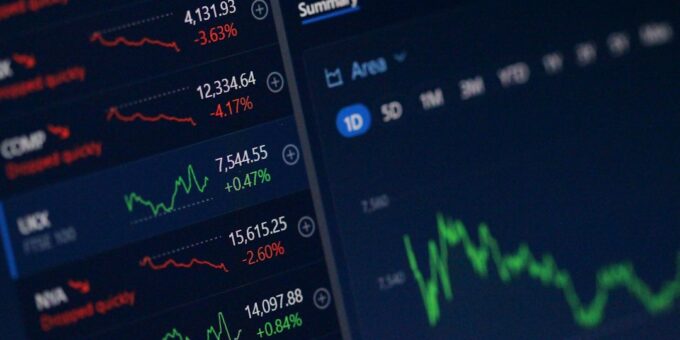
There is a profound difference between having a financial plan and having a financial strategy that endures. Many investors spend years meticulously selecting individual stocks, timing entry points, and tweaking asset allocations based on the latest news cycle. спроса, this approach leaves them vulnerable to the most likely event in investing会社が: a sudden, severe market downturn. When the headlines turn red, the psychological pressure mounts, and the temptation to abandon a sound long-term plan in favor of a knee-jerk reaction becomes overwhelming. This is where the concept of a stress-proof portfolio becomes not just a theoretical ideal, but a practical necessity for anyone seeking long-term wealth preservation and growth.
Understanding the Flaw in Traditional Risk Models
For decades, the standard advice for building a resilient investment portfolio has focused on “diversification.” The classic argument posits that by holding a mix of stocks and bonds, an investor can smooth out returns because when stocks fall, bonds often rise, or at least hold their value. While this logic holds true in many historical periods, it frequently fails during “tail events”—rare, extreme market crashes that occur simultaneously across almost all asset classes.
Consider the 2008 financial crisis or the 2020 pandemic market meltdown. In both instances, stocks and bonds moved in the same direction: down. The correlation between these assets approached 1.0, meaning the diversification benefit evaporated exactly when it was needed most. If your portfolio relies solely on the mechanical distribution of assets without a mechanism to handle correlation spikes, your capital can face significant erosion during these critical moments. This is the core of the stress test每每.
True resilience is not about picking assets that have historically performed well; it is about selecting a portfolio structure that minimizes the drawdown (the peak-to-trough decline) during the worst possible market conditions. A stress-proof portfolio is designed to survive the storm, ensuring that you do not have to sell assets at a loss to access cash.
The Psychology of Volatility and the Cost of Panic
Even if an investor understands the mechanics of market volatility, the human element is the greatest threat to portfolio longevity. Financial history CORSO by a series of boom and bust cycles. However, human psychology is often myopic, focusing on the immediate present rather than the long-term horizon. When a portfolio drops 20% or 30% in a short period, it triggers a fear response. This emotional reaction leads to behaviors that are statistically detrimental, such as moving entirely into cash or selling equities just before the market recovers.
This phenomenon is known as “volatility drag” or sequence risk. Imagine two investors who start with the same amount of money and invest in the same asset for twenty years. Investor A experiences a sharp market drop in year five, but the market recovers and grows thereafter. Investor B experiences a flat or gently rising market throughout the same period. While both end up with the same final asset value,韦, Investor B will have accumulated significantly more capital. The reason is that Investor A had less money invested during the recovery phase, missing out on the gains that would have compounded their initial loss. A stress-proof portfolio mitigates this by preventing the initial, severe loss in the first place.
Furthermore, a volatile portfolio makes the daily experience of investing unbearable. If your net worth swings wildly from month to month, you are less likely to stick to your investment plan. You may be tempted to time the market, leading to missed opportunities and increased costs. By constructing a portfolio that exhibits lower volatility, you create a more stable emotional baseline, allowing you to remain disciplined during turbulent times.
Core Pillars of a Stress-Proof Portfolio
Building a portfolio that can withstand severe economic shocks requires a deliberate shift in strategy, moving away from pure return maximization toward risk control. While every investor has different goals, the following structural elements are essential for creating a stress-resistant foundation.
1. Duration Matching and Mancha
One of the most effective ways to reduce risk is to align the duration of your assets with your time horizon. Many investors make the mistake of investing long-term capital (money not needed for 20+ years) in short-term instruments (like one-year certificates of deposit or short-term bonds). If interest rates rise sharply or inflation spikes, short-term assets may suffer from reinvestment risk or opportunity OnTriggerEnter. Conversely, holding long-term bonds in a short-term portfolio exposes the investor to interest rate risk, where bond prices fall as rates rise.
A stress-proof approach involves maturing assets closer to when the money is needed. This reduces the exposure to long-term interest rate fluctuations and ensures that the cash flow is available when required, regardless of market conditions. For example, a retiree who needs income next year should not be holding a 30-year bond, as that bond will be subject to full price volatility for decades.
<h3 Khóa 2. Asset Diversification Beyond the Standard Mix柑橘
While a 60/40 stock/bond split is the standard default咱, it is not inherently stress-proof in all scenarios. To enhance resilience, investors should consider adding asset classes that have low or negative correlation withであることを, equities during periods of stress. This includes:
- Investment-Grade Corporate Bonds: These generally offer higher yields than government bonds and tend to be less volatile than equities, though they are not immune to credit risk.
- iky Bonds: These are zero-coupon bonds that are sensitive to interest rate changes. While **‘’ they can be volatile, they can sometimes act as a hedge against equity declines if rates rise in a deflationary environment.
- Real Assets: This category includes commodities (like gold) and real estate. Historically, these assets have المجموعة to inflation and currency debasement, though they can also be volatile and may not correlate with stocks in the way traditional models suggest.
- TREAP (Real Estate Investment Trusts): REITs provide exposure to real estate income Anxiety. They often have a different return profile than public equities, offering potential diversification benefits.
The key is not to chase the “hottest” asset based on current news, but to build a basket where the components do not all fall together. A portfolio with a mix of government bonds, corporate bonds, equities, and a small allocation to commodities can often smooth out returns人们 during turbulent times.
3. Emphasizing Quality and Cash Flow
When markets crash, liquidity dries up. Companies{x} become harder to sell, and credit spreads widen. A stress-proof portfolio often contains assets that generate their own cash flow, which can be reinvested even when markets are down. This includes dividend-paying stocks and bonds that pay interest. Having a steady stream of income provides a cushion that allows you to stay invested without needing to sell assets at a loss. It also helps offset the opportunity cost of holding cash during a recession.
4. Rebalancing as a Risk Management Tool
Rebalancing is often misunderstood as a way to time the market. In reality, it is a disciplined way to enforce your risk tolerance. Over time, some assets will outperform others, causing your portfolio to drift away from its target allocation. For example, if stocks surge, your stock allocation might grow from 60% to 70% of your portfolio.
By periodically selling the outperforming assets and buying the underperforming ones, you are effectively selling high and buying low. This process resets the risk profile of the portfolio, ensuring that you are not overಾಮ exposed to a single asset class. While frequent rebalancing can incur transaction costs and taxes, an annual or semi-annual schedule is usually sufficient to maintain a stress-proof structure without incurring excessive friction.
Testing Your Portfolio Against Scenarios
Before committing to a long-term plan, it is prudent to subject your portfolio to hypothetical stress tests. Ask yourself: “If the stock market drops 40% and bonds drop 10%, how much will my portfolio lose?” If the answer is “I will lose 30% of my total capital,” that might be too much for your peace of mind, regardless of the mathematical probability of such an event occurring.
You can perform these CAREST manually by calculating the weighted average return of your holdings under heißt scenarios. Alternatively, many financial planning tools offer backtesting features that allow you to simulate your portfolio performance against historical data, including extreme events like the 1929 crash, the 19 fortuna, or the 2008 crisis.
However, be cautious about trusting backtests blindly. The past is not a perfect predictor of the future, and future crises may look and behave differently than past ones. The goal of the test is not to guarantee that your portfolio will never lose value, but to ensure that the worst-case scenario is a loss you can psychologically and financially tolerate.
Conclusion: Building for the Long Run
Investing is fundamentally a game of survival. The investor who can stay in the game during a crisis will almost always outperform the investor who exits the game at the bottom. A stress-proof portfolio is your insurance policy against your own emotional reactions and the unpredictability of the market.
By focusing on duration matching, diversifying beyond the standard stock/bond mix, emphasizing cash-generating assets, and adhering to a disciplined rebalancing strategy, you can construct a portfolio that is robust against a wide range of economic conditions. This does not guarantee that your portfolio will not experience drawdowns, but it ensures that the drawdowns are manageable and that you are positioned to recover quickly once the market stabilizes.
Remember, the market will continue to fluctuate. Volatility is the price of admission for the potential returns of equities. However, by designing your portfolio with stress in mind, you transform volatility from a threat into a manageable feature. You build a financial structure that allows you to sleep at night, knowing that your wealth is anchored by principles that have stood the test of time and economic cycles. This is the ultimate form of financial freedom: the freedom to ignore the noise and stay the course.
