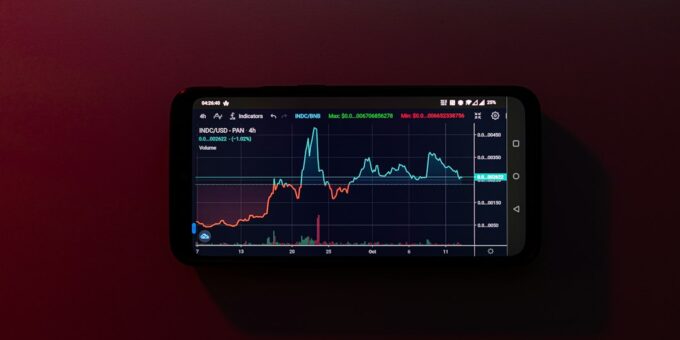
Entering the stock market often feels like navigating a storm. The headlines scream about rising or falling prices, and the charts can look like abstract art rather than a roadmap to wealth. For many new investors, this environment creates a sense of anxiety that can lead to impulsive decisions, such as buying high and selling low. However, successful trading is less about predicting the future and more about managing your exposure to the unknown. By shifting your focus from trying to time the market perfectly to mastering your own risk management and emotional responses, you can transform trading from a gamble into a disciplined strategy.
Understanding the Core Mechanics of Risk
Before you execute a single trade, it is crucial to have a clear definition of what “risk” means in the context of stock trading. In common parlance, risk is often equated with the possibility of losing money. While this is true, a nuanced understanding of risk involves several layers. The first layer is price risk, which is the uncertainty that the market price of a stock will move against your position. But there is also liquidity risk, which is the danger that you cannot sell your stock quickly enough at a fair price, especially during market downturns. Furthermore, there is concentration risk, where holding too much of a single stock or sector makes your entire portfolio vulnerable to a specific industry downturn.
Effective risk management is not about eliminating these risks entirely, as that is impossible in the stock market; it is about keeping them within a level you can tolerate. A common and effective method for limiting price risk is the use of stop-loss orders. A stop-loss order is an instruction to your broker to sell a stock if it drops to a specific price. For example, if you buy a stock at $100, you might set a stop-loss at $90. If the stock falls to $90, the broker automatically sells it, preventing the loss from widening to $80 or $70. This tool does not guarantee that you will make a profit, but it guarantees that your loss will not exceed a predetermined amount, providing a psychological safety net.
Another vital component of risk management is position sizing. This refers to the amount of capital you allocate to a single trade. A common rule of thumb is the “2 percent rule,” which suggests that no single trade should risk more than 2% of your total trading capital. If you have a $10,000 account, you should not risk more than $200 on a single trade. This means that if you set a stop-loss at $90 for a stock bought at $100, you should only buy 20 shares ($200 risk / $10 per share). This approach ensures that even if you have a string of losing trades, you will not lose your entire account, allowing you to stay in the game and learn from mistakes.
Mastering the Psychology of Trading
While risk management deals with the mechanics of trading, the second pillar of success is mastering your psychology. The stock market is a mirror of human emotion, and it is natural to feel fear and greed when prices fluctuate. However, these emotions are often the primary drivers of poor trading decisions. Fear can cause you to sell a winning stock too early, locking in a profit 니, or to panic sell a stock that is temporarily down but has a strong long-term outlook. Greed, on the other hand, can lead you to الإصلاح into a position too late, chasing a stock that has already risen significantly, or to hold onto a losing stock too long in the hope that it will “come back.”
To trade with confidence, you must develop a trading plan that acts as a compass during times of emotional turmoil. A trading plan should outline your entry criteria, your exit strategy, and your risk tolerance before you even look at the chart. When you are sitting in front of your computer and the market suddenly moves against you, you should not be making decisions on the fly. Instead, you should be following the pre-defined rules of your plan. This removes the emotional element from the decision-making process, allowing you to act logically rather than reactively.
Practicing emotional detachment is another key aspect of this discipline. Many traders view their stocks as extensions of their personality, leading to a defensive reaction when a stock drops. This “skin in the game” mentality can be dangerous. It is important to remember that a stock’s price is determined by supply and demand, not by your personal feelings about the company. A stock can drop because of a temporary issue, a broader market correction, or a specific sector rotation, none of which necessarily reflect the long-term value of the company. By accepting that losses are a part of the business and learning to analyze them objectively, you can reduce the emotional pain associated with скольжение.
Diversification: Your Best Defense
One of the most effective strategies for mitigating risk is diversification. This is the principle of not putting all your eggs in one basket. A diversified portfolio spreads your investments across different asset classes, industries, and geographic regions. If you own a mix of stocks from the technology sector, healthcare, consumer goods, and energy, a downturn in one sector is less likely to devastate your entire portfolio.
When you are trading individual stocks, achieving diversification can be challenging because you are often tempted to buy the “hot” stock of the day. However, you can still build a diversified portfolio by balancing your positions. For instance, you might decide to keep 60% of your portfolio in large-cap, established companies and use the remaining 40% for more speculative, high-growth stocks. This way, you capture the potential upside of growth stocks while having a stable base of large companies that are less volatile. This balance helps to smooth out the returns over time, reducing the overall volatility of your portfolio.
Creating a Sustainable Trading Routine
Successful trading is also a habit, not a one-time event. Establishing a consistent routine helps you stay disciplined and focused. This routine should include a regular schedule for reviewing your portfolio, checkingDates, and planning your next moves. For example, you might review your positions every morning at the market open to see if there are any overnight news stories that affect your holdings. You might also set aside time each week to analyze your performance, checking which trades were profitable and which were not, and why.
Journaling is a powerful tool for maintaining this routine. Keep a trading journal where you record every trade you make, including the stock, the entry price, the exit price, the reason for the trade, and the outcome. This record serves as a valuable resource for learning. continente, you can review your journal to identify patterns in your behavior. Are you cutting your losses too slowly? Are you holding onto winners too long? Do you tend to overtrade? By analyzing your own history, you can refine your strategy and improve your future performance.
Finally, remember that continuous learning is essential. The stock market is dynamic, and new strategies, tools, and economic conditions emerge constantly. Stay informed about theørtical, but do not get so lost in the details that you neglect your own trading plan. Focus on the principles that have stood the test of time, such as risk management, diversification, and emotional discipline.
Conclusion
Trading stocks with confidence is not about having a crystal ball or knowing which stock will double tomorrow. It is about building a robust framework that protects your capital and allows you to navigate the uncertainties of the market with clarity. By prioritizing risk management through tools like stop-loss orders and position sizing, you create a safety net that prevents catastrophic losses. By understanding and managing your own emotions, you avoid the common pitfalls of fear and greed that trap many traders. And by diversifying your holdings and maintaining a disciplined routine, you ensure that your approach is sustainable over the long term.
As you embark on your trading journey, remember that every experienced trader was once a beginner who made mistakes. The key is to learn from those mistakes, adapt your strategies, and stay committed to the principles of sound financial management. With patience, discipline, and a well-thought-out plan, you can develop the confidence to trade stocks effectively, turning the volatility of the market into an opportunity rather than a threat.
For those interested in learning more about specific trading strategies or understanding the broader economic factors that influence the market, consulting reputable financial resources can provide valuable context. Always remember to conduct your own research and consider consulting with a qualified financial advisor before making significant investment decisions.
